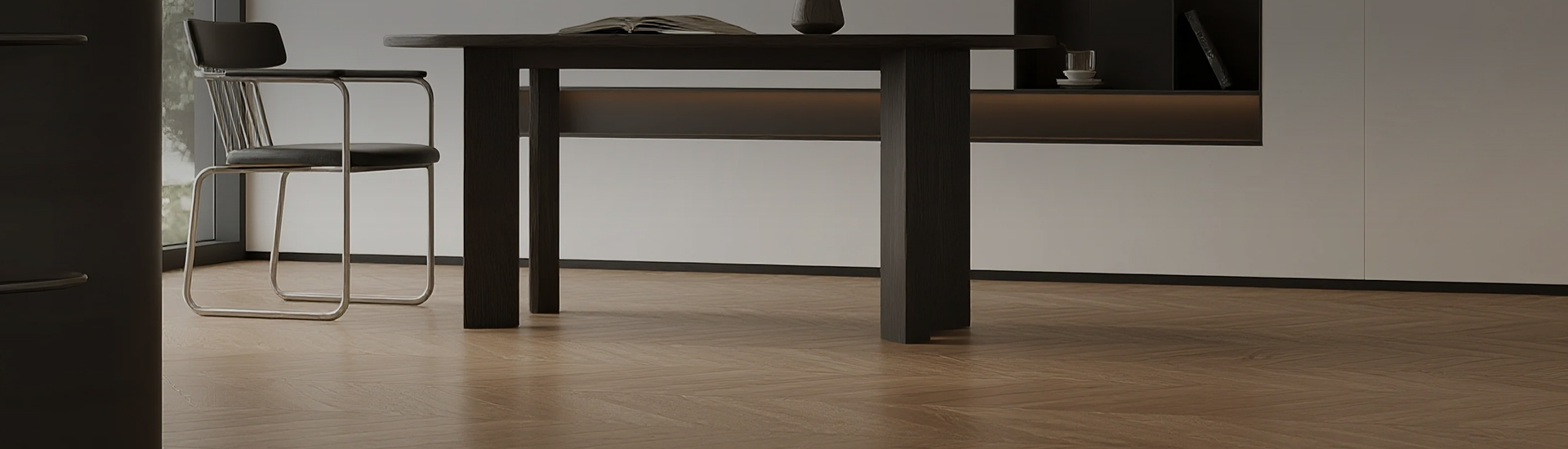
Walnut engineered wood flooring from Sinomaple Floors Inc represents a sophisticated fusion of timeless aesthetics, advanced engineering, and practical performance that meets both residential and commercial flooring demands. Built with a real walnut veneer over a multi-layer core, this flooring embodies the warm, rich tones and character-filled grain that walnut is renowned for, while delivering stability and durability far beyond that of traditional solid wood. Engineered walnut products like those in the Sinomaple Walnut Series leverage real hardwood top layers to preserve the natural beauty of walnut — from deep brown heartwood hues to gentle amber highlights — giving every plank a unique visual appeal that elevates spaces with warmth, depth, and understated luxury.
The design purpose of walnut engineered wood flooring extends well beyond simple surface covering. Its primary function is to provide a durable, visually rich flooring solution that performs reliably in a variety of environmental conditions. Because of its engineered multi-ply structure, walnut flooring controls wood movement caused by humidity and temperature changes, making it suitable for above-, on-, and below-grade installations, including living rooms, offices, retail spaces, and high-end hospitality environments.
In practical use, this flooring is ideal for high-traffic interior spaces where both aesthetic impact and longevity are important. Luxury residential homes, boutique hotels, premium office interiors, upscale restaurants, and designer retail outlets benefit from its combination of richness, natural variation, and performance. Beyond beauty, engineered walnut also serves functional roles — it enhances indoor comfort, offers good resistance to wear, and simplifies seasonal dimensional changes that can lead to cupping or gapping in solid wood floors.
Layered Construction: A real walnut veneer surface bonded over high-quality plywood or HDF core layers yields enhanced dimensional stability versus solid wood, helping resist swelling or shrinking due to humidity shifts.
Rich Natural Grain: Walnut’s distinctive grain patterns — ranging from fine, linear grain to sweeping curls — add visual depth and sophistication unmatched by many other species.
Multiple Installation Methods: Compatible with floating, glue-down, and nail/staple methods, engineered walnut adapts to different subfloor types, including concrete, wood, and radiant heat systems, offering wide flexibility in design and build.
Moisture Tolerance: Greater resistance to moisture-related issues makes walnut engineered wood suitable for kitchens, basements with proper moisture barriers, and other humidity-variable spaces.
Finish Options: From matte to satin to gloss, finish choices allow customization of sheen and texture, enhancing the flooring’s protective layer while tailoring it to interior design intent.
While Sinomaple’s website doesn’t list full technical details publicly, typical industry specifications for engineered walnut flooring — and what buyers can expect from a premium series like Sinomaple’s — include:
Thickness: Standard ranges from approximately 3/8" to 1/2" overall, with a hardwood top layer typically between 0.6 mm to 4 mm or more, depending on the product tier.
Core Construction: Multi-ply plywood or HDF with cross-layered grain orientation for structural strength and moisture resistance.
Widths & Lengths: Variable plank widths and lengths to support traditional and modern patterns, including wider plank looks that showcase walnut’s natural grain.
Finish: Factory pre-finished with UV-cured lacquers or oil finishes for durability and ease of installation.
These specifications reflect a balance between visual elegance and installation practicality, ensuring that the product is suitable for both new construction and renovation projects.
Acclimate the Flooring: Allow planks to acclimate in the installation environment for 48–72 hours to minimize dimensional changes.
Ensure Subfloor Readiness: Subfloors should be clean, level, dry, and structurally sound, with moisture barriers used where needed.
Use appropriate methods (floating, glue-down, or nail/staple) as recommended by the manufacturer based on your subfloor type and site conditions.
Maintain expansion gaps around the perimeter to allow for natural wood movement.
Sweep or vacuum frequently to remove loose debris.
Use a damp mop with wood-safe cleaners; avoid excessive water and steam mops.
Protect surfaces with felt pads under furniture and place mats at entry points to reduce grit abrasion.
Following these practices ensures the floor’s longevity, preserves finish integrity, and maintains the beauty of the walnut veneer.
Residential Interiors: From luxury homes to apartments, walnut’s warmth enhances living rooms, dining areas, corridors, and master suites with a premium finish.
Corporate & Commercial Spaces: Executive offices, boardrooms, and high-end retail environments look refined with walnut flooring, aligning with upscale branding.
Hospitality & Leisure: Boutique hotels, lounges, and restaurants benefit from walnut’s refined character and wear resistance, offering a memorable first impression.
Homeowners seeking a long-lasting, beautiful floor that delivers natural warmth and structural stability.
Architects & Interior Designers specifying quality hardwood flooring for luxury and mid-tier commercial projects.
Contractors & Builders requiring engineered wood that performs well across varied installation environments.
Property Developers & Hoteliers looking to create distinguished interiors with durable flooring that withstands heavy foot traffic.


